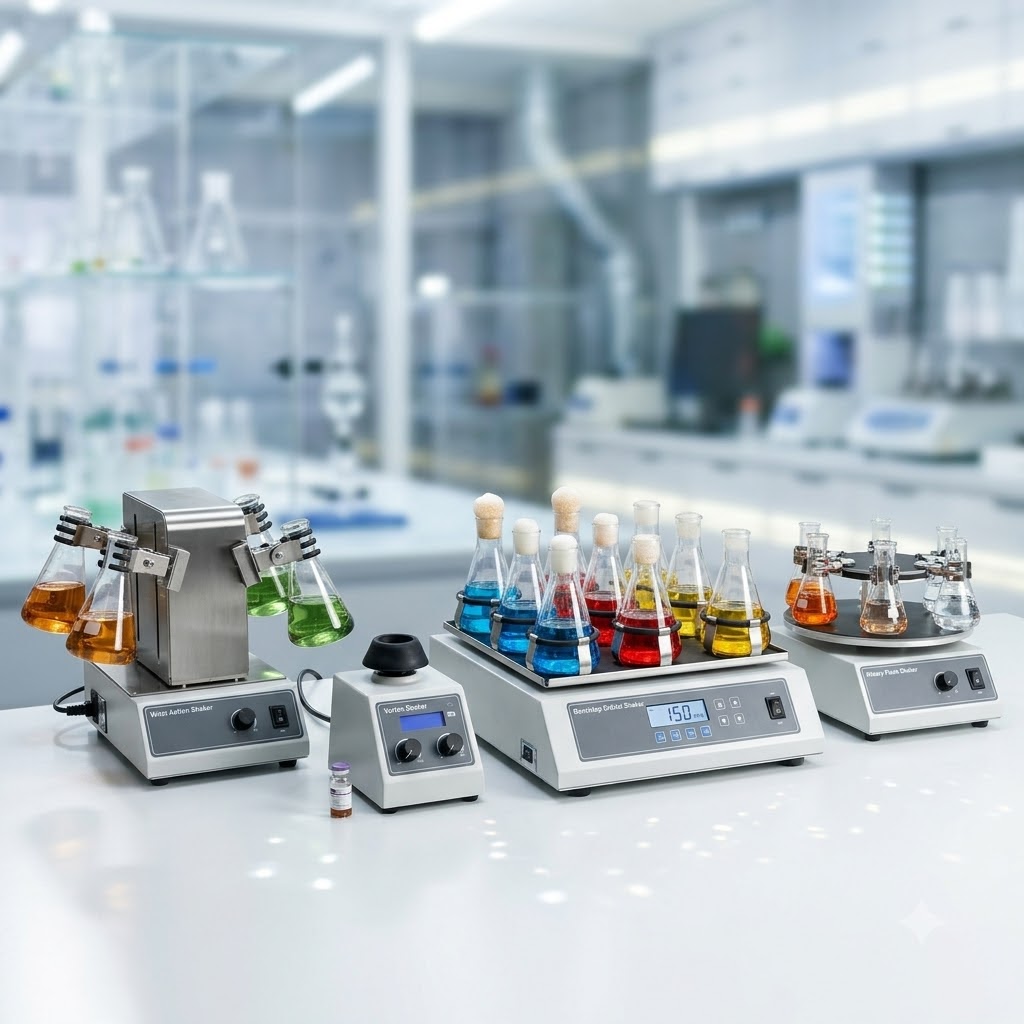
Laboratory Shaking Machines
Best Laboratory Shaking Machine for Research, Testing and Sample Preparation
Consistent sample movement plays an important role in laboratory testing, chemical analysis and scientific research. A Laboratory Shaking Machine is used to agitate liquids, solutions, culture media and other samples under controlled operating conditions. Depending on the application, equipment may provide orbital, reciprocating or linear shaking motion to support mixing, dissolution, incubation and sample preparation.
These machines are commonly used in pharmaceutical laboratories, educational institutions, biotechnology facilities, chemical testing centres and research departments. Selecting the right model depends on sample volume, flask capacity, shaking speed, platform design and the nature of the experiment.
Understanding Different Shaking Machine Requirements
Laboratory shaking machines are available in different designs to accommodate specific experimental procedures. The motion pattern and platform arrangement influence how samples move during operation, making it important to match the machine with the intended application.
|
Machine Type |
Common Laboratory Use |
|
Orbital Shaker |
Mixing liquids and culture media |
|
Reciprocating Shaker |
Back-and-forth sample agitation |
|
Linear Shaker |
Straight-line movement for mixing applications |
|
Platform Shaker |
Handling multiple flasks or containers |
|
Incubator Shaker |
Shaking samples under controlled temperature conditions |
Leading Laboratory Shaking Machine Suppliers Across Delhi NCR
Laboratories require equipment that delivers suitable movement and stable operation throughout testing procedures. Buyers can compare models according to speed control, platform capacity, timer settings and compatibility with laboratory vessels.
Best Laboratory Shaking Machine Manufacturer in Delhi
A Laboratory Shaking Machine Manufacturer in Delhi can cater to research centres, pharmaceutical laboratories, educational institutions and testing facilities. Buyers can discuss shaking mechanisms, platform dimensions, speed ranges and operating controls based on their experimental requirements.
Trusted Laboratory Shaking Machine Trader in Gurugram
A Laboratory Shaking Machine Trader in Gurugram can help laboratories source equipment for sample mixing, solution preparation and routine testing. Customers can enquire about available models, flask-holding arrangements and suitable machine configurations.
Top Rated Laboratory Shaking Machine Manufacturer in Noida
A Laboratory Shaking Machine Manufacturer in Noida can provide equipment options for biotechnology, chemical analysis and pharmaceutical applications. Selection can be based on the required motion type, sample quantity and duration of laboratory operations.
Reliable Laboratory Shaking Machine Trader in Ghaziabad
A Laboratory Shaking Machine Trader in Ghaziabad can assist educational and industrial laboratories in sourcing shaking equipment for regular testing activities. Buyers can compare platform capacity, speed adjustment and construction features before purchasing.
Professional Laboratory Shaking Machine Manufacturer in Faridabad
A Laboratory Shaking Machine Manufacturer in Faridabad can support testing centres and research facilities requiring controlled sample agitation. Equipment specifications can be discussed according to vessel size, workload and the type of shaking process involved.
Leading Laboratory Shaking Machine Trader in Greater Noida
A Laboratory Shaking Machine Trader in Greater Noida can help source laboratory equipment for universities, research institutions and manufacturing laboratories. Buyers can enquire about suitable models for mixing, extraction, incubation and sample preparation.
Regional Availability for Laboratory Equipment Procurement
From pharmaceutical research to academic experiments, laboratories across India use shaking equipment for different testing requirements. Buyers can evaluate product specifications, machine capacity and service support while exploring procurement options in major industrial regions.
Premium Laboratory Shaking Machine Manufacturer in Maharashtra
A Laboratory Shaking Machine Manufacturer in Maharashtra can cater to pharmaceutical companies, biotechnology facilities and chemical laboratories. Buyers can explore equipment configurations according to sample handling needs, operating speed and platform capacity.
Best Laboratory Shaking Machine Wholesaler in Pune
A Laboratory Shaking Machine Wholesaler in Pune can support bulk equipment requirements from research institutions, colleges and industrial laboratories. Buyers can discuss model availability, quantities and specifications for laboratory setup or expansion projects.
Trusted Laboratory Shaking Machine Trader in Uttar Pradesh
A Laboratory Shaking Machine Trader in Uttar Pradesh can help laboratories source equipment for mixing, sample preparation and research applications. Customers can specify their required shaking motion, platform size and operating range while enquiring.
Leading Laboratory Shaking Machine Manufacturer in Karnataka
A Laboratory Shaking Machine Manufacturer in Karnataka can serve biotechnology, pharmaceutical, educational and scientific research facilities. Equipment selection can be planned according to sample volume, vessel compatibility and the operating conditions of the laboratory.
Top Rated Laboratory Shaking Machine Wholesaler in Gujarat
A Laboratory Shaking Machine Wholesaler in Gujarat can assist laboratories and institutional buyers with larger equipment procurement requirements. Enquiries may include machine types, platform configurations and quantities needed for multiple testing stations.
Reliable Laboratory Shaking Machine Trader in Tamil Nadu
A Laboratory Shaking Machine Trader in Tamil Nadu can help source equipment for chemical testing, microbiology, pharmaceutical research and academic laboratories. Buyers can compare speed controls, shaking motion and platform arrangements for their applications.
Professional Laboratory Shaking Machine Manufacturer in West Bengal
A Laboratory Shaking Machine Manufacturer in West Bengal can provide equipment options for scientific research, educational laboratories and industrial testing facilities. Buyers can discuss machine construction, control systems and sample capacity before selecting a model.
Premium Laboratory Shaking Machine Wholesaler in Madhya Pradesh
A Laboratory Shaking Machine Wholesaler in Madhya Pradesh can cater to colleges, research centres and commercial laboratories requiring equipment in larger quantities. Bulk procurement can be planned around model specifications and laboratory requirements.
City-Wise Sources for Laboratory Shaking Machine Requirements
Before purchasing a shaking machine, laboratories should consider the number of samples processed per cycle, the required speed range and the stability of the equipment during operation. The following locations represent additional procurement markets for laboratory equipment.
Best Laboratory Shaking Machine Trader in Kerala
A Laboratory Shaking Machine Trader in Kerala can assist research laboratories, educational institutions and pharmaceutical facilities in sourcing suitable equipment. Buyers can enquire about sample capacity, platform arrangements and machine operating features.
Trusted Laboratory Shaking Machine Manufacturer in Haryana
A Laboratory Shaking Machine Manufacturer in Haryana can cater to industrial testing centres, academic laboratories and pharmaceutical units. Equipment requirements can be matched with the intended shaking process, sample quantity and laboratory workflow.
Top Rated Laboratory Shaking Machine Wholesaler in Mumbai
A Laboratory Shaking Machine Wholesaler in Mumbai can handle bulk enquiries from research facilities, universities and commercial laboratories. Customers can discuss equipment models, platform sizes and quantities required for their operations.
Leading Laboratory Shaking Machine Trader in Bengaluru
A Laboratory Shaking Machine Trader in Bengaluru can help biotechnology companies, research institutions and testing laboratories source shaking equipment. Buyers can explore suitable models for culture preparation, mixing and routine sample agitation.
Reliable Laboratory Shaking Machine Manufacturer in Hyderabad
A Laboratory Shaking Machine Manufacturer in Hyderabad can serve pharmaceutical research units, diagnostic laboratories and biotechnology facilities. Buyers can evaluate shaking speed, motion type and vessel capacity according to their testing procedures.
Professional Laboratory Shaking Machine Wholesaler in Ahmedabad
A Laboratory Shaking Machine Wholesaler in Ahmedabad can support educational institutions, industrial laboratories and research organisations with bulk equipment requirements. Procurement enquiries can include machine specifications, quantities and delivery planning.
Premium Laboratory Shaking Machine Trader in Chennai
A Laboratory Shaking Machine Trader in Chennai can help laboratories source equipment for chemical analysis, microbiology and pharmaceutical applications. Customers can discuss operating speed, platform dimensions and the type of sample containers used.
Best Laboratory Shaking Machine Manufacturer in Kolkata
A Laboratory Shaking Machine Manufacturer in Kolkata can provide laboratory shaking equipment for educational, research and industrial testing environments. Buyers can enquire about suitable configurations for sample mixing, agitation and preparation procedures.
Trusted Laboratory Shaking Machine Wholesaler in Jaipur
A Laboratory Shaking Machine Wholesaler in Jaipur can assist colleges, laboratories and research facilities with equipment procurement. Buyers can discuss bulk quantities, machine configurations and specifications required for their laboratory setup.
Specifications Worth Comparing Before Purchase
A laboratory shaking machine should be selected according to the actual testing procedure rather than price or appearance alone. Reviewing the technical details helps buyers identify equipment that fits their workload and laboratory conditions.
|
Technical Parameter |
What Buyers Should Evaluate |
|
Shaking Motion |
Orbital, reciprocating or linear movement |
|
Speed Range |
Suitable RPM for the intended procedure |
|
Platform Capacity |
Number and size of containers supported |
|
Timer |
Manual or digital operating time control |
|
Drive Mechanism |
Stable movement during continuous operation |
|
Construction |
Durable body and easy-to-clean platform |
|
Safety |
Stable base and suitable operating protection |
Equip Your Laboratory for Consistent Sample Processing
A suitable Laboratory Shaking Machine supports routine sample agitation, mixing and preparation across scientific and industrial applications. Whether sourcing through a manufacturer, trader or wholesaler, buyers should verify motion type, speed range, platform capacity, vessel compatibility and operating controls. Choosing equipment according to the laboratory's actual procedures can improve workflow consistency and make day-to-day sample handling more convenient.